Don’t forget the staircase in your home improvement plans!

Posted on July 6th, 2011 in Uncategorized
Tags: ,  |  No Comments  | 

Summertime home improvement projects are in full swing. Did you include the staircase in your upgrade plans this year?

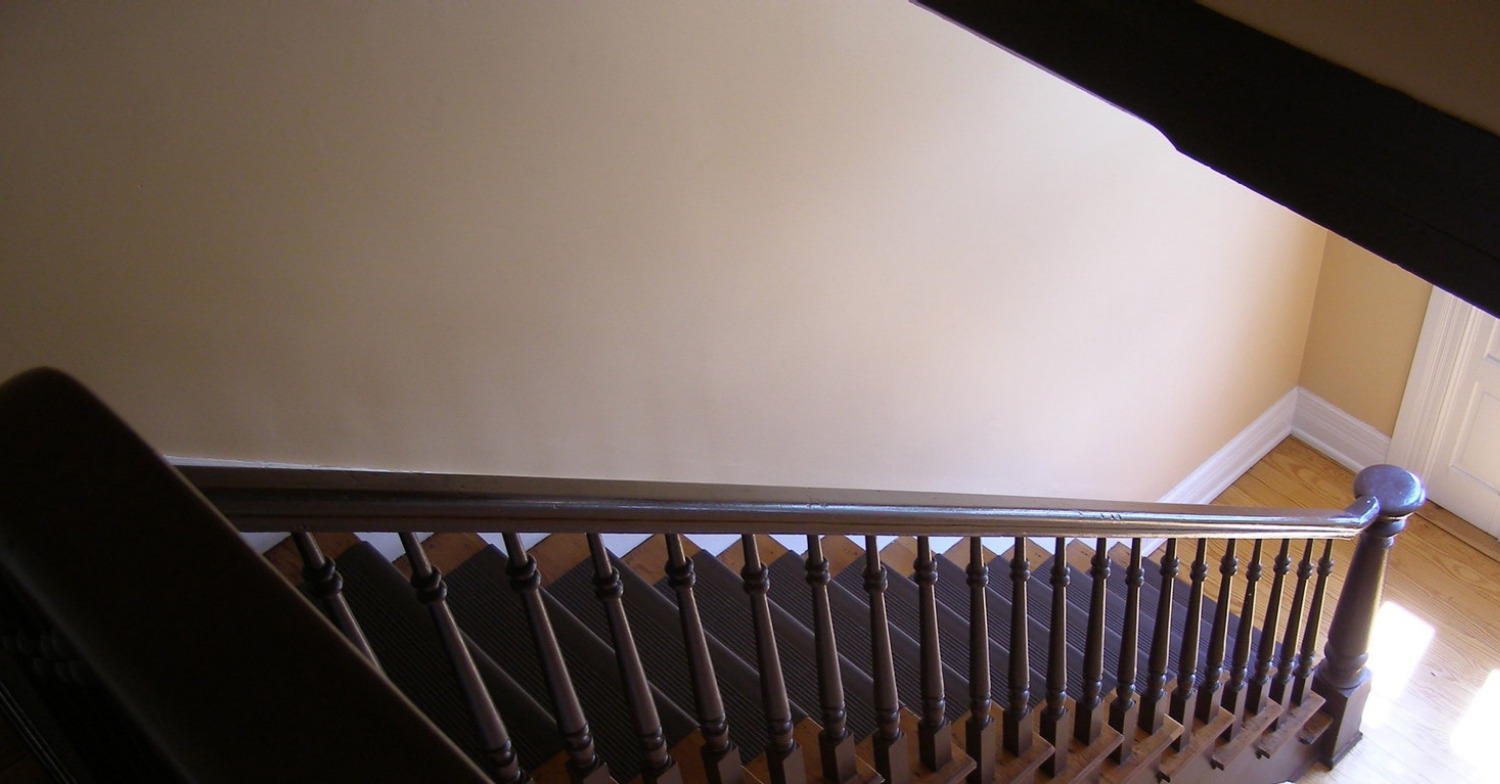
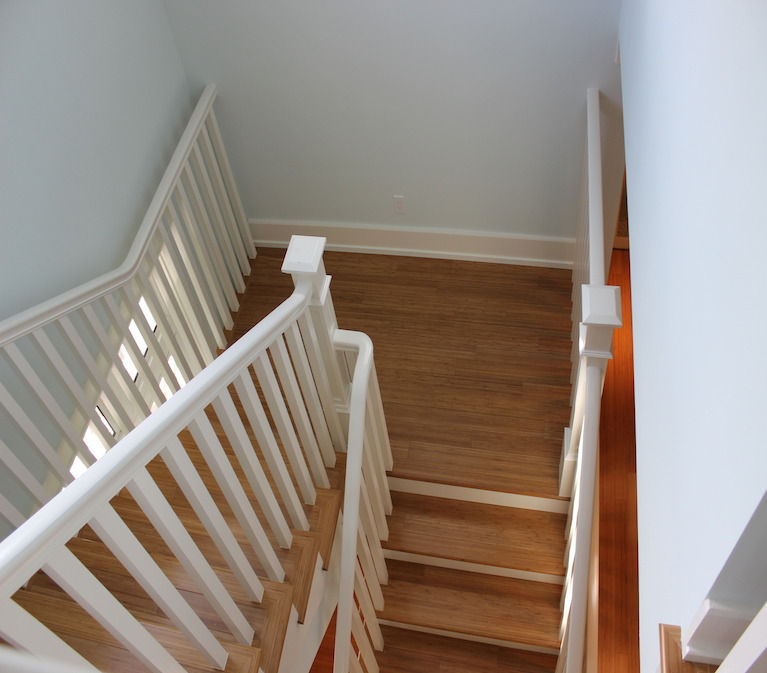
Most homeowners are not aware of the visual importance a staircase holds in the overall appearance of the home. In fact, there are many architects and interior designers that ignore the stair as a major piece of art or furniture that sets the tone for the entire house. Safety, durability and function are the primary design elements incorporated every stair. However, the appearance, era, or region of a staircase is vital in completing a home’s interior décor.

One of the great things about changing the design of a stair is that it can be accomplished with minimal expense and can be completed by many do-it-yourselfers.

The change can be as simple as replacing the old carpet on the treads with Retro-Tread red oak replacement treads. This would be a huge upgrade and the cost is minimal. The treads can be installed without any structural change to the stair.

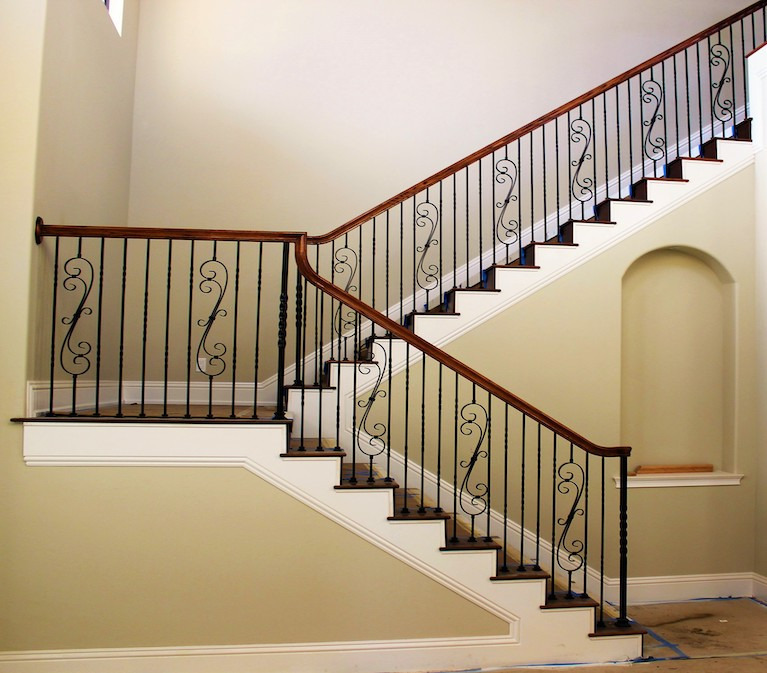
Another change that can add elegance to a stair (without breaking the bank) is replacing old, painted balusters with wrought iron… On the market now is a new baluster replacement product called the “Transformer System”. This replacement system makes it easy to adapt your old wood baluster system to a new and improved iron baluster look without removal of the handrail. Again, this requires no major structural changes, which is a great cost saver.

A key to the success of any project is a good support team. Be sure you purchase your stair parts and materials from a certified stair builder or a company that has a qualified stair builder on staff that can assist you with the design and material selection.

The primary concern we, at stairpartpros.com, always stress with homeowners in the design of their stair, is SAFETY. We have helped many homeowners tackle their stair remodeling projects with confidence by making sure they have a safe, code compliant design, along with the proper parts, and most importantly, step by step assistance.

Upgrading your staircase is a great way to create a warm, inviting home atmosphere while maintaining a small budget. Ultimately, when you do it yourself, the pride of a job well done is priceless.

Ed Trimner - www.stairpartpros.com

How to install stair treads

Posted on June 13th, 2011 in Uncategorized
No Comments  | 

The type of stair tread used in your stair has a direct correlation to the degree of difficulty of the installation process.  Here are some basic tips to make it as easy as possible.

The most important element in stair installation is adhesives.  I have found polyurethane construction adhesive to be a superior product when installing treads.  Nails or screws only hold the tread in position while the glue sets.  The glue is attachment strength in stair assembly.

The mitered return tread is the easiest to install.  Simply cut the tread  1/8” to ¼” long to allow for scribing to the skirtboard.  Set your scribe or scribe block to the exact space between the mitered return and the open side skirtboard.  Then scribe the tread along the wall side skirtboard.  Cut to your mark and you have a perfect end joint.

Whenever possible, remove any temporary treads so you can have access to the back of the riser. 

Apply a liberal amount of polyurethane construction adhesive to the stringers, wall skirtboard, and to the face of the riser where the tread will be attached.

Place the tread in position and nail into the stringers,  then run screws through the back of the riser into the back of the tread.  This closes any gap at the back of the tread and creates a super strong application.

Plain treads for a wall to wall (or curb skirt to curb skirt) application,  present a bit more of a challenge.

Wall to wall treads require (2) scribe joints, one at each end.  Unless you have advanced carpentry skills the easiest way to approach this is with a template.  Simply make a template of the tread location with a piece cardboard or lightweight wood.  Once you have the template scribed to fit exactly where you want it, trace the template onto the tread, cut it to your lines, and you are ready for placement.

To make it easier to install, back cut a bevel of about 1 degree on both ends of the tread.  If you have a tight fit, this will allow you drop one end into position and then slide the other down into place.  It also allows for a space where the construction adhesive can expand and bond. 

Apply your adhesive to the stringers, both wall skirtboards, and the riser.  Drop the tread into position and nail to the framing.  Run screws through the riser into the back of the tread.

The new RetroTread replacement tread is installed in the same manner as the plain tread.  Since the RetroTread is designed to be installed over the top of an existing tread, the nosing of the existing tread will need to be cut off flush with the face of the riser.  If the existing tread is 1-1/2” thick, a new riser face will be needed to cover the portion of the tread that isn’t covered up by the RetroTread.

Tread installation requires a basic level of carpentry but the results are well worth the effort.

Ed Trimner - www.stairpartpros.com

Select the correct stair tread

Posted on June 2nd, 2011 in How To ...
Tags: , , ,  |  No Comments  | 

There are many types of wood stair treads available today. The standard full tread is designed to be installed when the stair is initially constructed or when completely removing an existing tread and replacing it with a new one.
The mitered return treads are used on an open sided staircase where the balusters are mounted directly on the treads and not on a curb wall. The Installation of these treads require the removal of the balusters or installed prior to the initial baluster installation.

There is a new stair tread product on the market that is designed to be installed over the existing tread when carpeting is removed. This tread is called RetroTread. It is 5/8” thick so it replicates the carpet thickness as to not change the rises of your stair. It can be easily installed by the Do-It-Yourselfers and does not require major tearout and reconstruction.

A hardwood tread should always be used on the stair due to the use and abuse to which a stair is typically subjected. Hardwood will withstand much more wear than softer wood and stay beautiful longer.

Be sure the finish that is applied to the treads is durable and designed for floor applications. It is important to use a low sheen or flat finish to help reduce the possibility of slipping.

Always have a secure handrail on your stair and keep your stairway clear of objects and safety hazards.

Ed Trimner - www.stairpartpros.com

Slackers are Gone

Posted on April 13th, 2011 in Uncategorized
No Comments  | 

The business atmoshere here in SW Forida is finally improving and thigs are happening. If you didn’t prepare for the upswing, you may have missed the boat.

As we get busier and the work load increases, job efficiency is essential. No more procrastination or slacking off.

You will need to get more work done in less time and hire more people only when it is necessary.

We are all happy to get back to work. Many of us have learned a great deal about performance and productivity and will be much leaner as we move forward into the new era.

But keep in mind that the market has turned the corner and is moving ahead. There is no room for slackers here.

Ed Trimner
www.stairpartpros.com

New Stair Remodeling Products

Posted on April 11th, 2011 in Uncategorized
No Comments  | 

Stair remodeling has just become easier with a couple of new prodiucts.

The new RetroTread was developed to allow replacing the old carpet on your stairs with great looking hardwood treads.

It has a built-in trim under the nosing for a superior finished look.

It is available on our site along with the other standard treads. 

I have other new products to update on our site including the Transformer System.  The system is designed to replace existing wood balusters with new iron balusters.

I will be writing soon with complete descriptions and installation instructions.

Controlled Growth

Posted on March 15th, 2010 in Uncategorized
1 Comment  | 

It is finally getting warmer here!!  Yes, it does get cold in SW Florida, at least to us.  The work climate is heating up also.  It is time to get ready to apply your “controlled” growth plan.  Now is the time to replenish inventories while the prices are down.  There will be material price increases soon (supply and demand).  Plan your personnel growth as well.  Training your new people can be more effective and thorough when you have the time and patience to do it properly.  I remember what it was like here five years ago.  Any warm body that walked in the door was put on a job.  I don’t ever want to see that again.  Controlled growth is a way to maintain quality and retain profits through better training and gradual expansion. 

Ed Trimner

StairPartPros.com

Slow Economy - Good For Customers

Posted on January 2nd, 2010 in Uncategorized
No Comments  | 

In this economic downturn, we as business owners, have an oportunity to get back to the basic principal that has sustained us through these slow times… Customer Service!

“Customer Service” is a catch phrase that has been used so frequently that it has lost all meaning.  However, as our workload has lightened,  we are afforded more time to focus on our customer’s needs and give them the attention they deserve. 

Three years ago, customers were put on a 6 month waiting list to get anything built, and the Housing Industry (at least in south Florida) lost much of its integrity through greed and exploitation of the public trust.  Those of us who refused to compromise our values, are left with an opportunity and obligation to start rebuilding that public trust and restore the integrity of our profession.

A happy customer is a perfect way to promote a positive image for your business.  The best way…Customer Service.

Give your customer the time and assistance they need to make the decisions that they will be pleased with for years to come.

Customer Service.

Ed

How to Visually Interpret the Stair Codes

Posted on December 28th, 2009 in How To ...
Tags: ,  |  27 Comments  | 

Hi All,

The stair codes are an ever changing set of rules that must be followed when building a stair. Not only are stair codes updated every 3 years, but they may differ from state to state and city to city.

The Stairway Manufacturers’ Association has produced a Visual Interpretation of the International Code Council (ICC) for it’s members, to assist them with difficult and subjective code interpretations.  I have used this booklet to show inspectors the intent of the code and to ensure that “everyone is on the same page”. 

By demonstrating to the governing inspectors our desire to build a safe and code compliant stair, we can become a model and a resource to them and other contractors in our area.

Building codes are a much needed tool the building industry.  They protect the public from poor construction and help to create a safe environment for our customers.  We, as professional stairbuilders welcome strict code enforcement to ensure public safety and proper building practices by all.  

I hope that these links and this post help you with your stair building projects.  As always, if you have any questions about stair codes, or anything relating to stairs, feel free to ask me or any member of the Stairway Manufacturer’s Association.

Thanks,

Ed

How to Install Forged Iron Balusters

Posted on December 15th, 2009 in How To ...
Tags: ,  |  18 Comments  | 

Step One:

The first step to installing forged iron balusters is to select the balusters that you like. If you haven’t already found balusters that you like click here to look for a design.  Now assuming you’ve already got your handrail up let’s move on to step two.

Step Two:

Iron balusters are offered in both square or round shapes and may be installed with or without baluster shoes. Either way requires that the appropriately-shaped hole be cut in the tread and handrail. One way to cut the square hole is by drilling a round hole in the wood that is the same overall width as the baluster itself. Then chisel out the hole to make it square.

If you use baluster shoes, you may decide to drill a round hole and not chisel it square. This hole will be the size of the diagonal measurement of the baluster and will be hidden by the shoe.

The hole drilled in the tread should be about 1.5″ deep.

You must also drill a hole in the bottom of the handrail that is directly above the hole you’ve drilled in the tread. Use a level to ensure you’re drilling the hole directly above the one in the tread. Once you’ve done this move onto step three.

The hole drilled in the handrail should be about 3/4″ deep.

Step Three:

Once you’ve drilled the holes for the balusters you must cut them to length. In order to do this accurately it is a good idea to place the top of the baluster in the hole that you drilled in the tread, mark a line on the baluster where it reaches the bottom of the handrail. You should then cut the baluster with a hack saw. Check that the baluster will fit by putting the bottom of the baluster in the hole on the tread and sliding the top under the handrail and pusing it up into the hole you’ve cut in the handrail. If it fits take it back out and move on to step four.

Step Four:

I recommend using epoxy in the hole to help hold the baluster in place and keep it from moving. You may apply the epoxy in one of two ways:

  1. If you have only a few steps to install, you may put the epoxy in the hole before the baluster. Apply a small amount of epoxy-you don’t want it to overflow when the baluster is inserted. Then, put the shoe on the baluster and place the baluster in the hole. Important: Epoxy sets in approximately 15 minutes, so you must be speedy with the process once you’ve started.
  2. If you have several steps to install-or if you don’t feel comfortable with scenario #1-then place the baluster in the hole before applying the epoxy. Put the epoxy in the hole between the baluster and the side of the hole. Do not get epoxy on any wood surfaces that you are going to finish.

If you’re using round forged iron balusters, you may drill a small hole through the baluster and insert a small finishing nail through the wood. Or, you may fit the baluster into a hole of the same size drilled into the tread and allow it to turn.

Angle shoes are used beneath the handrail and where the baluster connects to the treads where a knee wall is used. A set screw on the side of the shoe will hold it in place.

Step Five:

You’re Finished! Sit back and enjoy the beautiful stairway you’ve created.

If you have any questions on iron baluster installation or suggestions for future “How-To’s” please post them.

Thanks,

Ed

Welcome Post

Posted on December 15th, 2009 in How To ...
No Comments  | 

Welcome,

In this section of StairPartPros Blog I will give weekly “How To’s” designed to help you with your stair installation questions. Varying from installing handrail and balusters to how to know if you are making legal changes to your stair.  This welcome post will be followed by my first post on How to Install forged iron balusters.

Thanks

Ed